

Accra (Ghana) July 20 2026
Mrs Enyonam Adzo Apetorgbor, Chief Executive Officer of the Keta Investment Promotion Centre (KIPC), has called on GCB Bank and other key businesses operating within Keta and the wider Anlo enclave to consider responsible corporate citizenship by implementing deliberate, measurable and sustained corporate social responsibility (CSR) initiatives that directly support local development.
She said institutions that had benefited for decades from the patronage, labour, goodwill and economic activities of the communities they operate in had a responsibility to invest meaningfully in their social and economic progress.
Mrs Apetorgbor made the call during an exclusive interview session with veritasnewsgh.com after her advocacy publication titled, “Banking Keta for Decades, Yet Investing Too Little in Keta: A Firm Call for Responsible Corporate Citizenship in Keta and Anlo.”
Using GCB Bank as a case study, she noted that the bank had maintained a strong commercial presence in Keta for more than half a century, serving public sector workers, traders, pensioners, fisherfolk, artisans, entrepreneurs and businesses across the area.
She observed, however, that despite its longstanding relationship with the municipality, residents and customers cannot identify any major or visible projects or social interventions undertaken by the bank.
She clarified that her appeal was not intended to single out GCB Bank for criticism but to challenge all major businesses operating in Keta and Anlo area to adopt a higher standard of corporate responsibility.
“Businesses cannot continue to derive revenue, labour, land, patronage and goodwill from a community while treating local development as somebody else’s responsibility”
“Corporate social responsibility should go beyond occasional donations, ceremonial appearances and publicity-driven gestures, insisting that it must be strategic, adequately resourced, sustained and publicly accountable.” She spoke
Mrs Enyonam Afetorgbor also observed that Keta and neighbouring coastal communities continued to grapple with recurring disasters such as tidal waves, flooding, and coastal erosion, which had disrupted livelihoods, businesses and public infrastructure, making stronger corporate support more critical than ever.
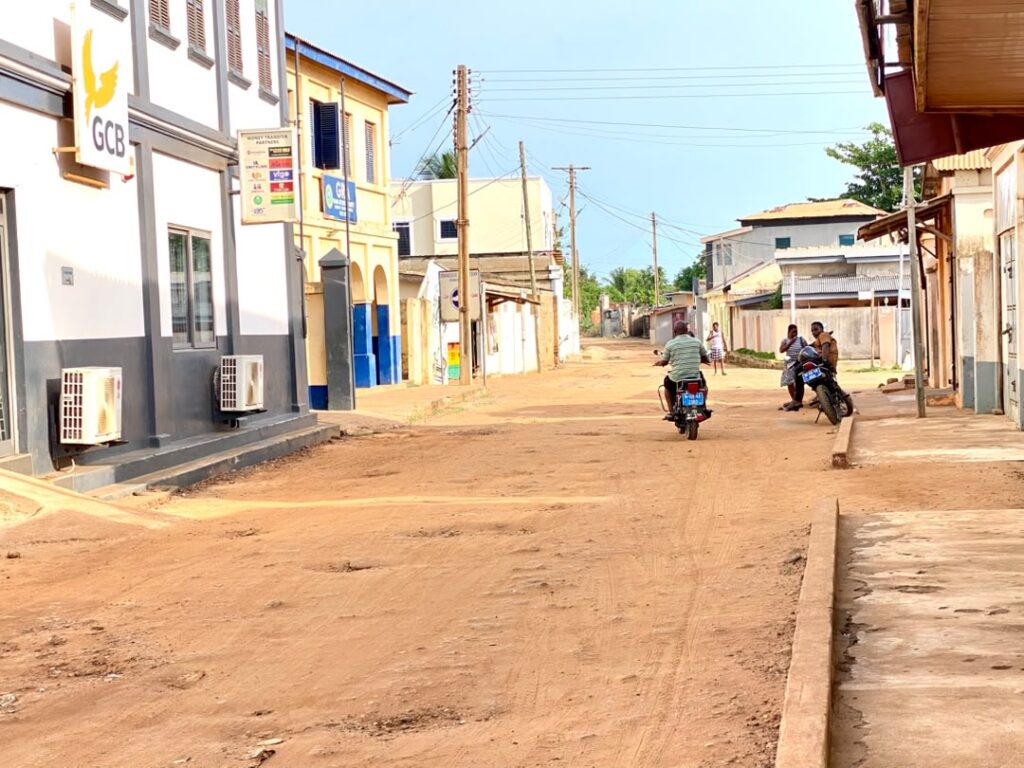
“Beyond the recurring challenges of tidal waves, flooding and coastal erosion, Keta Municipality has for decades grappled with a deteriorating road network that continues to affect movement, commerce and urban development. Several roads linking key economic and social facilities, including the Keta Market, hotels, resorts and other business centres, remain in deplorable condition,” ”
“Even roads within the vicinity of major commercial institutions, including banking facilities, have suffered years of neglect, raising concerns about the need for stronger partnerships between businesses, local authorities and communities to improve infrastructure and enhance sustainable development.” Madam Enyonam said

The Keta Market was identified by her as one of the area’s busiest commercial centres, presenting a strategic opportunity for institutions such as GCB Bank to deepen financial inclusion through financial literacy programmes, affordable credit, digital banking, micro-insurance and enterprise support, particularly for women and young entrepreneurs.
She made a proposal of a practical community investments, including improved drainage systems, street lighting, sanitation facilities, landscaping, disability-friendly infrastructure and targeted support for local businesses, describing such interventions as both responsible corporate practice and sound business strategy.
Mrs Apetorgbor further urged hotels, telecommunications companies, fuel stations, supermarkets, construction firms, financial institutions and other major enterprises operating in Keta and Anlo to develop annual CSR programmes in consultation with traditional authorities, local assemblies, market associations and community groups to ensure their investments addressed local development priorities.
She noted that communities had sustained these businesses for generations and deserved visible, long-term partnerships that reflected a genuine commitment to their development.
“Commercial presence without meaningful local partnership is no longer enough. The time has come for businesses to move beyond operating in our communities to becoming active partners in building their future.”

Mrs Apetorgbor’s advocacy aligns with growing concerns among residents and youth of Keta, who have in recent times called on authorities and major institutions operating in the municipality to support efforts towards addressing critical infrastructure challenges, particularly the deplorable road network and the redevelopment of the Keta Market. They argue that businesses and institutions that have benefited from the town’s economic activities over the years should play a more active role in improving the infrastructure that sustains their operations and the livelihoods of residents.
Mrs Apetorgbor said stronger collaboration between the private sector and local communities would not only improve livelihoods and build resilience but also deepen public trust, strengthen local economies and promote sustainable development across Keta and the wider Anlo area.