
There are moments when a government must exercise regulatory power. There are also moments when the exercise of that power raises questions that go beyond the immediate dispute and compel the public to ask whether justice is being applied fairly.
The unfolding controversy involving mining entrepreneur Angela List and Adamus Resources has reached such a point.
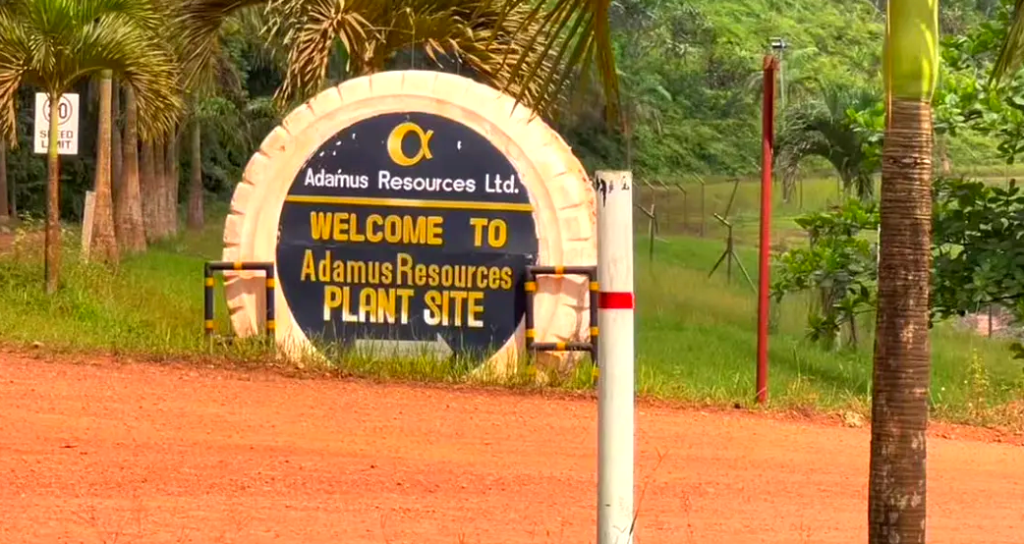
The government has upheld the revocation of Adamus Resources’ mining leases covering the Akango, Salman and Nkroful concessions in the Western Region. The decision followed an earlier revocation in April and a subsequent review process after Adamus petitioned the Minister for Lands and Natural Resources. Adamus has rejected the allegations and announced its intention to challenge the decision, arguing that the process did not comply with the Minerals and Mining Act, 2006 (Act 703).
Government, for its part, insists that the decision was based on regulatory compliance and the protection of the public interest. It has cited alleged breaches including unauthorised arrangements involving portions of the concessions and other regulatory infractions. That is the government’s right.
But the bigger question is this: At what point does legitimate regulation begin to look like the systematic destruction of a Ghanaian entrepreneur and her investments?. That question deserves to be asked without accusing anyone of wrongdoing that has not been established.
What makes the Adamus case particularly uncomfortable is the apparent accumulation of adverse actions around a Ghanaian entrepreneur who has built a significant presence in the mining industry.
Angela List is not a newcomer to mining. Through Nguvu Mining, she has been associated with several mining interests across West Africa, and Adamus has operated in Ghana for years. Her profile also includes significant experience in the mining-services industry and leadership roles within the Ghanaian mining sector.
When the state takes away a major mining investment, therefore, it is not merely cancelling a piece of paper. It is potentially destroying years of investment, employment, community relationships, supplier contracts, investor confidence and entrepreneurial capital. And this is where government must be extremely careful.
If a business has committed substantial capital to rehabilitating or rebuilding a mine, only for the state subsequently to withdraw the rights necessary for that investment to generate a return, the consequences go far beyond the individual businessman or woman.
It sends a message to every Ghanaian who may be considering investing millions of dollars in a long-term industrial venture: Can the rules change after you have invested?
The Northern Ashanti question
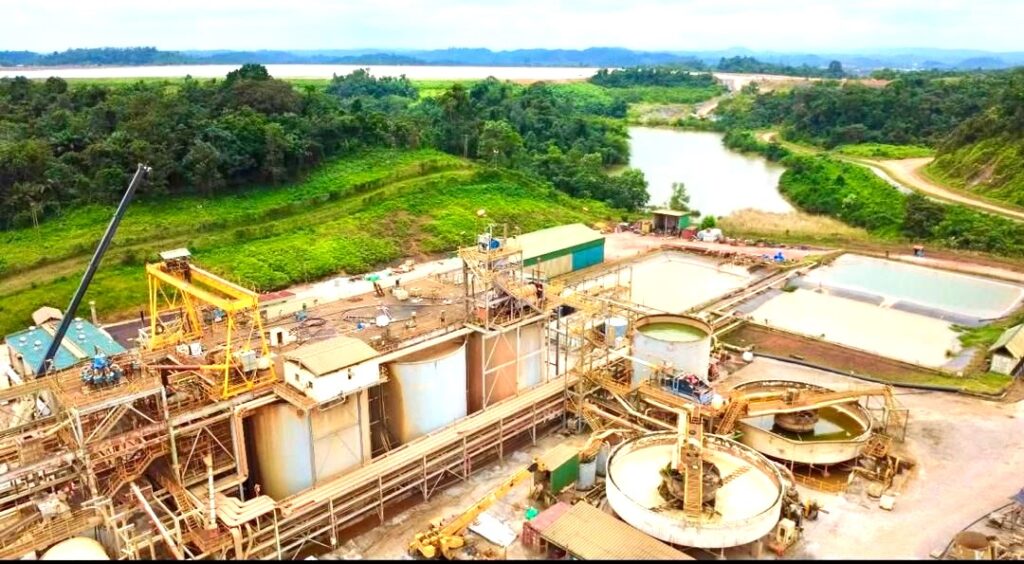
The concerns become even more serious when the Adamus controversy is considered alongside the reported difficulties surrounding Angela List’s other mining interests, including Northern Ashanti.
If, as has been reported, significant capital—said to be around US$70 million—was committed to rebuilding the Northern Ashanti operation, then government owes the public a particularly convincing explanation for any subsequent action that threatens that investment.
Government should never create the impression that an entrepreneur can invest enormous sums of private capital into a Ghanaian asset and later find herself exposed to decisions that effectively wipe out that investment without an exceptionally transparent and compelling process.
Is this regulation or selective enforcement? This is perhaps the most important question.
Nobody should argue that a mining company must be protected from the law because it has invested heavily. If Adamus breached Ghana’s mining laws, the company must answer for those breaches. But the law must be applied consistently.
If similar infractions exist elsewhere in the mining industry, are those companies receiving the same treatment? If the answer is yes, government should demonstrate it. If the answer is no, then legitimate questions arise about selective enforcement.
The fight against illegal mining, environmental degradation and abuses of Ghana’s mineral resources is too important to be undermined by perceptions of unequal treatment. Ghanaians must be able to believe that the state is enforcing the law—not choosing which investors to punish. The optics are becoming uncomfortable
There is another issue government cannot ignore: perception.
The Ministry of Lands and Natural Resources has gone to considerable lengths to say that the Adamus assets are not being revoked to facilitate their sale to another investor. The Ministry stated on August 12 that there is currently no government decision to sell Adamus or its mining assets and described suggestions to the contrary as speculative. That clarification is welcome.
But it also demonstrates why transparency is so important. When the state removes a private operator from a valuable mineral asset, public suspicion naturally follows. The best antidote is not simply a denial. It is radical transparency.
Publish the basis for the decision.
Publish the relevant findings.
Explain the alleged breaches.
Explain the financial and regulatory history.
Explain why revocation—not a penalty, remediation plan, supervised operation, or negotiated corrective arrangement—was considered the appropriate remedy. And most importantly, demonstrate that comparable cases have been treated comparably.
Government should pause and reconsider
The government may ultimately be right on the substance of the Adamus case. But being legally empowered to take an action does not necessarily mean that action is the wisest one. The state should ask whether revocation is genuinely in Ghana’s best interest. Would a restructured arrangement protect the state’s interests while preserving jobs and private investment?
Could Adamus be subjected to tighter regulatory supervision?
Could outstanding obligations be negotiated and recovered?
Could specific breaches be remedied without destroying the underlying investment?
Could the government appoint an independent technical and legal panel to examine the matter afresh?
These are questions worth answering before the final chapter is written.
The government should not see reconsideration as weakness. Sometimes the strongest government is the government confident enough to review its own decisions.
Protecting Ghanaian entrepreneurs
There is a broader principle at stake here. Ghana repeatedly complains that its entrepreneurs do not have enough access to capital and that domestic businesses are too small to undertake major industrial projects.
Yet when a Ghanaian entrepreneur becomes sufficiently ambitious to participate in capital-intensive sectors such as mining, we must ask ourselves whether our regulatory environment encourages that ambition or punishes it.
If Angela List has broken the law, let the law take its course. If she has not, she deserves protection from arbitrary or disproportionate state action. And if there are legitimate breaches that can be remedied, then government should consider whether remediation is better for Ghana than destruction.
Because the question should not ultimately be: “Angela List or Government?”
The question should be: “What outcome best protects Ghana’s interests, Ghanaian investment, Ghanaian jobs and the integrity of Ghana’s mining industry?”
The government has already established a review mechanism in response to Adamus’s petition, and the Minister subsequently upheld the revocation. Adamus has now indicated that it will challenge that decision.
That legal process should be allowed to run its course. But before the dispute becomes a prolonged legal battle that destroys value for everyone, government should take one more hard look at the decision.
Because from the outside, the sequence of events is beginning to create an uncomfortable perception: that a prominent Ghanaian woman who has built significant interests in the mining sector may be facing an extraordinary concentration of regulatory pressure. That perception may be wrong.
But it is the government’s responsibility to ensure that the evidence, the process and the transparency are strong enough to prove it wrong.
The minerals belong to Ghana. The state must protect them. But the state must also protect the credibility of its own regulatory system. And if there is even a reasonable possibility that the current course could amount to the unnecessary destruction of a Ghanaian-owned enterprise and the capital invested in it, the responsible thing to do is not to dig in. It is to review.
Government should reconsider the revocation of Adamus’s leases—not because Angela List is above the law, but because nobody, including the government itself, should be above scrutiny.
Credit:- Citinewsroom