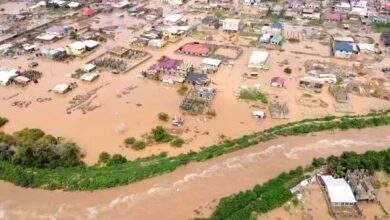
Galamsey Leaves Ghana’s Forests in Ruins: More Than 8,900 Hectares Lost, Over 200 Arrested and 4,000 Excavators Held

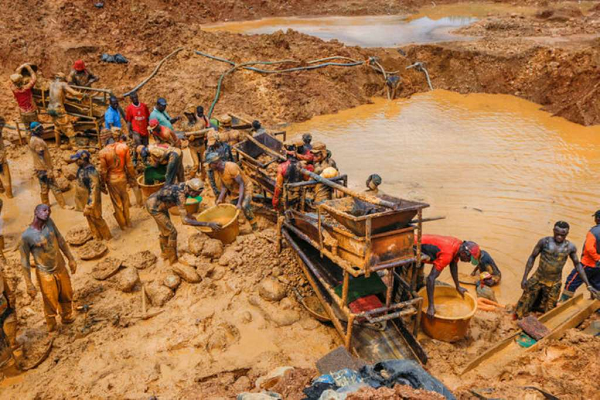
Illegal mining has destroyed about 8,900 hectares of Ghana’s forest reserves, equivalent to approximately 12,500 football fields, exposing the scale of environmental devastation caused by galamsey across the country.
The Minister for Lands and Natural Resources, Emmanuel Armah-Kofi Buah, disclosed this at a policy dialogue between the Ministry and the IMANI Centre for Policy and Education in Accra, where images of heavily degraded forest reserves were presented.
“What you are looking at is not an earthquake. It is a forest reserve,” Mr Buah said, underscoring the extent of the destruction caused by illegal mining.
According to figures from the Ministry, current as of July 2026, nine of Ghana’s 288 forest reserves have been severely affected by illegal mining, with the degradation also placing significant pressure on Forestry Commission staff responsible for protecting the reserves.
The scale of the destruction is reflected in enforcement operations. A total of 258 people have been arrested, while 234 excavators, 2,728 pumping machines, 1,724 changfan machines, 461 motorbikes and tricycles have been seized or immobilised in operations targeting illegal mining in forest reserves.
Mr Buah, however, said arrests alone would not solve the problem, identifying prosecution as a major challenge.
“The challenge we are having is not the arrest. It is the prosecution,” he said.
He said the Ministry was working with the Attorney-General’s Department to address bottlenecks affecting the prosecution of suspects arrested in illegal mining operations.
Beyond field enforcement, the government is tightening controls on mining equipment entering the country. Mr Buah disclosed that more than 4,000 excavators are currently being held at Ghana’s ports pending compliance with a new documentation and clearance regime.
The government is also pursuing reforms to the mining licensing system, including a proposal to reduce the maximum initial duration of large-scale mining leases from 30 years to 20 years and impose stricter requirements on exploration and prospecting licence holders to demonstrate actual work within specified periods.
Mr Buah criticised the practice of companies retaining mining concessions for decades without meaningful exploration or development, saying some holders simply wait for investors to acquire their concessions.
To strengthen the protection of water bodies, the government has also recruited and trained about 2,000 Blue Water Guards to provide intelligence and support anti-illegal mining operations.
Although the Minister acknowledged disciplinary concerns, including allegations of bribery within the programme, he said the initiative was generally producing useful results.
The government’s emerging strategy therefore combines stronger field enforcement with tighter controls on mining equipment, licensing reforms, prosecution, community participation and intelligence gathering, as authorities seek to halt further destruction of Ghana’s forests and water resources.