Ho (Volta Region) – July 15 2026
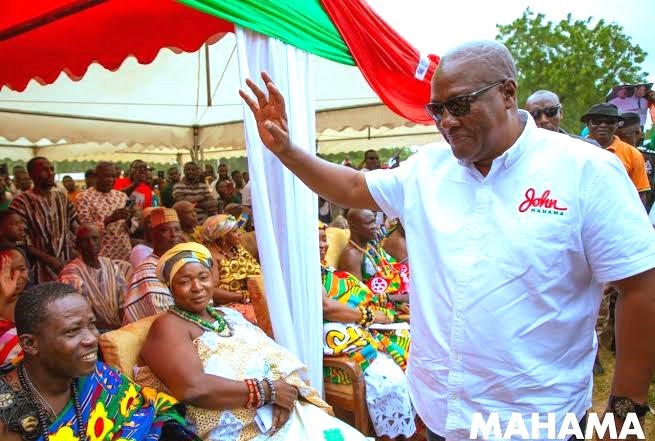
President John Dramani Mahama is set to embark on a working tour of the Volta Region aimed at strengthening citizen engagement, assessing development progress, and reaffirming the government’s commitment to accelerating socio-economic transformation in the region.
The two-day tour, scheduled from Thursday, July 16, to Friday, July 17, 2026, forms part of President Mahama’s nationwide “Resetting Ghana Tour.”
The visit, according to the National Democratic Congress (NDC) Volta Regional Secretariat, is aimed at enabling the President to engage directly with residents, inspect ongoing government projects, commission completed infrastructure and assess development priorities across the region.
During the first day of the tour, President Mahama will perform the sod-cutting ceremony for the 24-Hour Economy Market at Juapong, inspect the newly completed 1,500-seater Multipurpose Assembly Hall at Peki College of Education, and assess progress on major road projects including the Asikuma–Anyirawase Road, UHAS Bypass and Anyirawase–Ho Road.
He will also inspect the Multipurpose Laboratory Project at the University of Health and Allied Sciences (UHAS), Sokode Campus, and participate in a Free Primary Health Care Programme Durbar at the Ho Municipal Hospital.
On Friday, the President will inspect the Ho Sports Stadium, and then engage residents and stakeholders at a Resetting Ghana Citizens’ Engagement at the Ho Technical University, and commission the newly completed Akatsi North District Police Headquarters at Ave-Dakpa.
The tour will end with an inspection of the Ho–Denu Big Push Road Project, a major infrastructure initiative expected to improve transportation, trade and connectivity within the region, linking the border town of Aflao to the regional capital.
According to Mr Kafui Sorkpa Agbleze, the Regional Communications officer who issued the statement, the engagement forms part of President Mahama’s commitment to inclusive governance, accountability and improving public service delivery through direct interaction with citizens.
He called on residents, traditional authorities, students, religious leaders, civil society groups, businesses and the media to participate in the citizens’ engagement session at the Ho stadium to discuss government policies and provide feedback on national development.