AN OPEN LETTER TO THE MINISTRY OF FOREIGN AFFAIRS, MINISTRY OF INTERIOR AND MINISTRY OF LOCAL GOVERNMENT, CHIEFTAINCY AND RELIGIOUS AFFAIRS

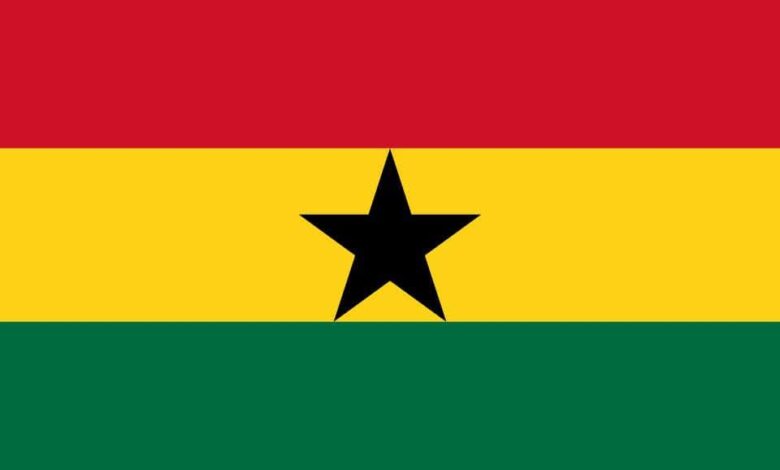
Stop Tagging us Togolese – Fogah Nunuku, Aflao
……………………………………….
I am compelled by my personal experience and experiences of others to write this open letter to the Ministry of Foreign Affairs, Ministry of Interior and Ministry of Local Government, Chieftaincy and Religious Affairs.
I am writing to the above – named ministries because I believe the Passport Office, National Identification Authority and the Registry of Births and Deaths are respectively under them.
There are emerging, troubling and disturbing practices by some officials of the Passport Office, National Identification Authority and the Registry of Births and Deaths which demand urgent attention and action. The emerging practices are the rejection or the questioning of the names of genuine Ghanaian citizens solely because of the spelling, pronunciation or perceived foreign sound of their names.
The most shocking aspect of this disturbing practice is the impunity at which a Ghanaian official can harass and abuse a fellow Ghanaian just because of a mere spelling of his or her name.
Need i remind readers that officials Immigration Service and Ghana Armed Forces in the past were deployed at polling stations in our border communities in order to scare prospective voters. Gun- wielding security men and women!!!
Now , the deployment made to prevent some Ghanaians from obtaining Passports ,Birth Certificates and Ghana Cards seem silent but dangerous.
Is it lawful to deny me a birth certificate because of the spelling of my name?
Is it constitutional for a passport office in Ghana to deny me a passport just because of the sounds of my name?
Is it legal for the National Identification Authority in Accra to deny me a Ghana Card because my surname is AHIABLE?
WHO IS A GHANAIAN?
I do not intend to educate the three ministries on Citizenship of Ghana.
In fact, I have no expertise to do so. I am however enjoined by the purpose of this letter to at least explain to the public who qualifies to be a Ghanaian by law.
Article 6 of the 1992 Constitution of the Republic of Ghana defines the categories of persons who qualify as citizens of Ghana, including citizenship by birth, adoption and as foundlings.
The Constitution nowhere provides that the spelling, pronunciation or linguistic origin of a person’s name determines his or her citizenship.
Likewise, Sections 7, 8 and 9 of the Citizenship Act, 2000 (Act 591) set out the qualifications for Ghanaian citizenship.
The law says if any of your parents or grandparents is or was a Ghanaian, you are also a Ghanaian by birth. It does not matter if your name sounds Spanish or French or British.
It is therefore illegal to deny an applicant her Birth Certificate for the reason that the father is a Togolese and the mother is a Ghana.
The law also says any child below the age of 7 found in Ghana whose parents are not known is deemed to be a Ghanaian by birth. Even if your skin looks Chinese!
The law went further to cater for a child of 16 years and below who is not a Ghanaian but adopted by a Ghanaian. Such an adopted child becomes a Ghanaian and even a renunciation of the adoption by the adopted parents cannot terminate the citizenship status of the adopted child.
You can even become a citizen of Ghana through marriage.
The Constitution of Ghana and the Citizenship Act do not empower any public officer to reject or question a person’s citizenship merely because his or her name is written in a Francophone or any other linguistic form.
It is therefore unconstitutional and unlawful for officials of the Passport Office or NIA or the Registry of Births and Deaths to introduce additional requirements or unofficial criteria not recognized by the Constitution or any statute.
MY LOCUS
I come from Aflao Agbawoeme in Ketu South Municipal Assembly. The distance from my house to the border to Togo is just eighty (80) metres. Other border communities are Fihokope , Gakli( Kologa), Akporkploe, Anoenu , Agbogbome , Wudoaba etc .
Many Ghanaian citizens residing in these communities received their early education in the Republic of Togo. As a result of this Francophone educational background, their names were registered using French spelling conventions. These variations in spelling do not change their identity or nationality.
In French “U” is not pronounced as U in English or in Ewe. Our “U” sound is OU in French.
My surname is NUKUNU.
In order to make the pronunciation phonetically right, NUKUNU in French will become NOUKOUNOU.
Deku will become DEKOU.
Ahorlu will become AHORLOU.
Also, names are written based on our own pronunciation styles in our communities.
One can decide to write AGBODZA as AGBODJAN or Agbodzan.
I can decide to write my KWAKU as Koku or Korku.
People even adopted French names and used them. Some of them include CHRISTOPHE, GREGOIRE, FRANÇOIS, DIEU – DONNÉ, GERAUDE etc.
These variations clearly affect the way our names were registered at birth or in our primary schools.
Examples include:
- AWUDOR recorded as AWOUDOR;
- ATISU recorded as ATISSOU;
- KWASI or KORSI recorded as KOSSI;
- ABUYA recorded as ABOUYA.
- KPOTOSU recorded as KPOTOSSOU
- Hundzeto as HOUADJETO
- GUNU recorded as GOUNOU
- MAWUTOR recorded MAWOUTOR
- Agbedzinu recorded as AGBEDZINOU OR AGBEDJINOU
These spellings merely reflect linguistic influence and cannot reasonably be interpreted as evidence that the bearers are not Ghanaian citizens.
DONT I HAVE THE RIGHT TO BEAR A NAME OF MY CHOICE?
Every Ghanaian has the right to bear any lawful name chosen by his or her parents or acquired in accordance with law. The spelling, pronunciation or phonetic appearance of a name cannot lawfully be used to determine citizenship.
Indeed, Ghana is a multilingual country whose citizens have interacted with neighbouring countries for generations. It is therefore unsurprising that some Ghanaian names have English, French or indigenous spelling variations. Such differences cannot lawfully deprive any citizen of his or her constitutional rights.
Why should our Passport Office or NIA Office or Registry of Births and Deaths accept names like JOHNSON SMITH OR JOHN ADAMS but questions names like Gadzekpo Amouzu ?
What is wrong if a child is named “Junior” OR “Senior” OR “Small” OR
“Brother”?
Lawyers reading this, is it unlawful to name a child ‘ Junior’?
WHAT MY COUSIN WENT THROUGH
In June 2026, my cousin went to the Passport Office in Accra for vetting for the processing of her passport application. Despite her being a University student, I double – checked all the necessary documents to be presented before she proceeded to the Passport Office.
She produced all the required documents, namely:
- Her Ghana Card;
- Her Birth Certificate; and
- The Ghana Cards of both parents.
Despite satisfying all documentary requirements, her application was rejected solely because her surname contained the letters “OU”, which reflected a Francophone spelling.
She was further directed to produce her parents’ pre-2012 identity cards, a requirement that many genuine Ghanaian citizens are unable to satisfy. This resulted in unnecessary delay, inconvenience and emotional distress. I suspect a deliberate targeting.
MY SINCERE CONSENT
I find it deeply troubling that officials appear to reject or question applicants simply because their names do not conform to English spelling conventions.
Such conduct amounts to discrimination and has no support in the Constitution or the Citizenship Act.
I am particularly concerned that this unofficial practice appears to disproportionately affect citizens living in Ghana’s border communities, especially those with historical and educational ties to neighbouring Francophone countries.
MY POSITION
I fully support the need for the Passport Office, NIA and the Registry of Births and Deaths to conduct rigorous due diligence to prevent non-citizens from fraudulently obtaining Ghanaian documents.
However, due diligence must always be exercised within the confines of the law. It should be based on credible evidence of citizenship and not on assumptions arising from the spelling, pronunciation or perceived foreign appearance of a person’s name.
There is a clear distinction between lawful verification and discriminatory profiling.
It is unfortunate for a Ghanaian official to look at my name NUKUNU FOGA and immediately declare me TOGOLESE!
I respectfully appeal to the Ministry of Foreign Affairs and Regional Integration, Ministry of Interior and the Ministry of Local Government, Chieftaincy and Religious Affairs to:
- Direct the Passport Office, NIA and the Registry of Births and Deaths to immediately discontinue the practice of rejecting or questioning applications solely because of the spelling or pronunciation of applicants’ names.
- Ensure that citizenship is determined strictly in accordance with the Constitution and the Citizenship Act, 2000 (Act 591).
- Issue clear administrative guidelines to all officers to prevent discrimination against citizens whose names reflect Francophone or other recognised linguistic influences.
- Organise training programmes for officers to enhance their appreciation of Ghana’s linguistic, cultural and historical diversity.
- Establish an effective review mechanism for applicants who believe they have been unfairly denied passports, birth certificates or other services on account of the spelling or pronunciation of their names.
- Ask the agencies to top forcing on us citizenship of another country.
- Ask their agencies to stop tagging us Togolese just by seeing the spelling and the sound of our names.
I humbly urge the three ministries to intervene promptly to protect the constitutional rights of genuine Ghanaian citizens.
Citizenship must be determined by law and the Constitution—not by the spelling, pronunciation or perceived foreign appearance of a person’s name.
I am sure this open letter will receive urgent attention and action in the interest of justice, equality, fairness and national unity.
Nukunu Desdeddy Foga
GPS VZ-0272-2533
P.O Box AF 421,
Aflao
Ferguson Ahorlu
William Nyatepe Dzatabu
Emmanuel Dorklu
Gilbert Korbla Keklie
Nukunu Fitikides Festus
Dennis Y. Akoetey
Mawuko Atisu
Napoleon Atisu
Hope Simbelly Hlorgbe
Suzzy Shee
Dominic Delanyo Xatse
Julius Kwame Anthony
ClassPee Della Russel
.
Source : Adapted from a petition by the youth of Aflao and adopted to suit this open letter .